US
US
 Canada
 Japan
Japan
 United Kingdom
 European Union
 Taiwan
 Malaysia
 Singapore

Eating Assistance for Children With Down Syndrome

Key Takeaways
- Children with Down syndrome may benefit from upright, supported seating that helps align the hips, knees, and ankles during meals.
- A stable footplate, accessible tray, and adjustable chair height can encourage safer, more independent self-feeding.
- Easy-to-clean feeding gear can help families feel more comfortable letting children explore food through touch, smell, and taste.
- If feeding feels difficult or stressful, families should work with their pediatrician, speech-language pathologist, occupational therapist, or feeding team for individualized support.
Hello! I’m Rachel — a pediatric speech-language pathologist of 14 years and a mom of three. I’m here to share my experiences assisting children with Down syndrome with eating. My youngest has a diagnosis of Down syndrome, and she brings our family so much joy! When we learned of her diagnosis, I knew I wanted a high chair that would help her to sit with the optimal alignment for feeding, development, and safety.
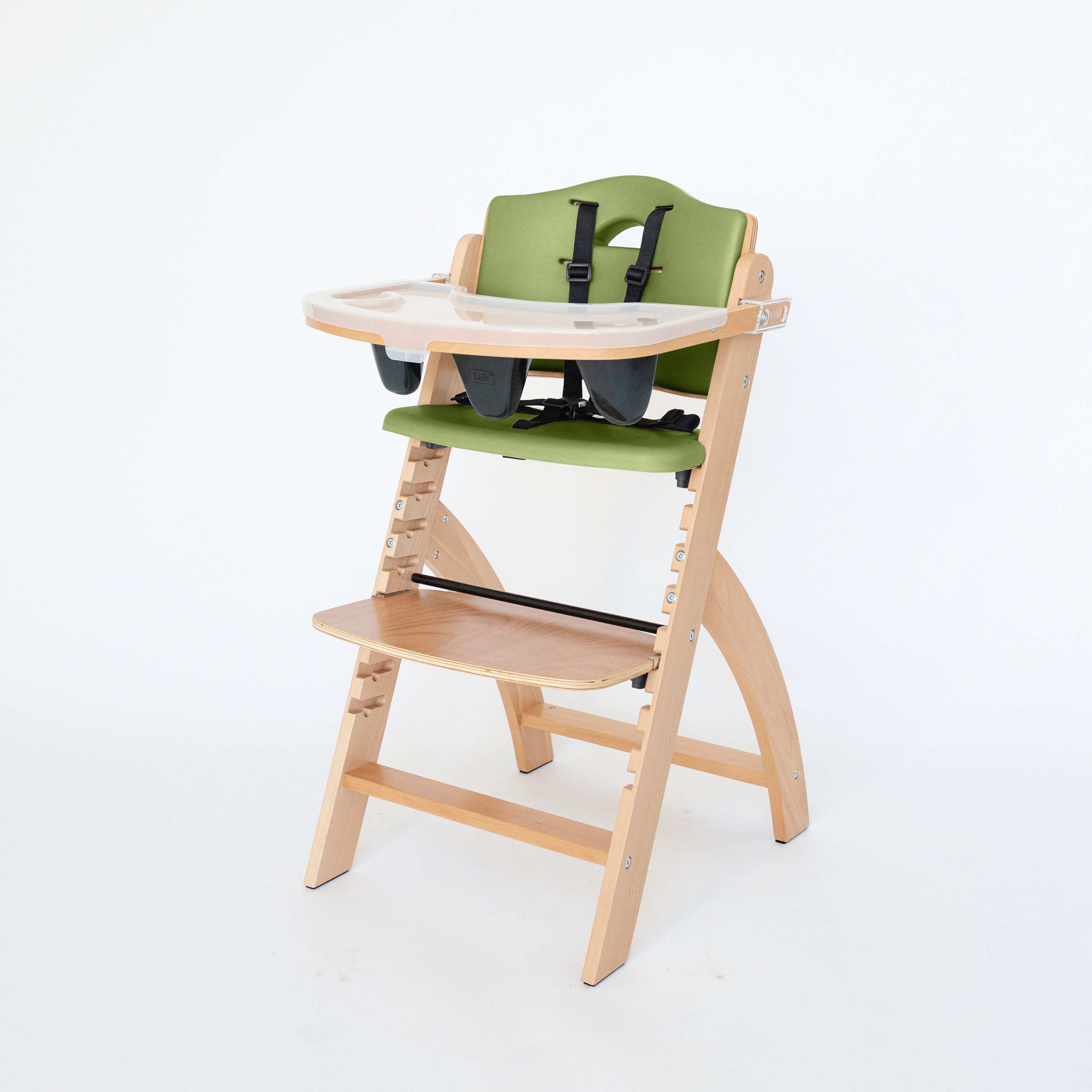
For a child with Down syndrome, eating can come with challenges. They can sometimes be at risk for feeding difficulties for various reasons — low muscle tone, cardiac and pulmonary conditions, and oral motor weakness. The Abiie® Beyond Junior® Y High Chair has far exceeded my expectations in supporting my daughter so that she can eat, thrive, and make social connections during mealtime.

Children with Down Syndrome: Positioning and Eating
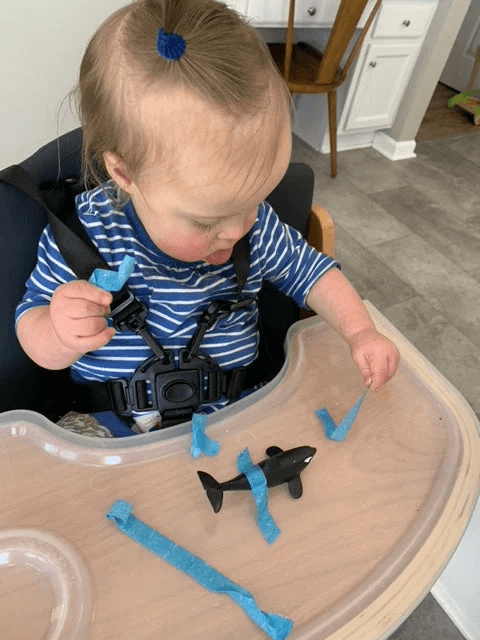
As a speech-language pathologist, I was taught early on that positioning matters. Babies and toddlers need to sit in an upright position where the hips, knees, and ankles can be positioned at 90 degrees. Babies and toddlers also do well having their feet planted on solid surfaces during mealtimes. Additionally, it is helpful to have a baby or toddler positioned at the table or with a tray where their food is easily accessible so that they can learn self-feeding and independence!
As a mom and therapist, I have encountered my fair share of high chairs, and many do not offer everything that I feel a new eater needs — especially children with Down syndrome. The Abiie® Beyond Junior® Y High Chair checks all of my boxes — proper alignment, a footplate, and adjustability — so that each child can properly access food on their tray or at the family table.

A Supportive Mealtime Setup
When a child is working on feeding skills, small setup details can make a meaningful difference. Before meals, I like to look at whether my child’s body is supported, whether her feet have a firm place to rest, and whether the food is close enough for her to reach without leaning or sliding. A predictable setup helps her focus less on staying balanced and more on exploring food, practicing self-feeding, and joining the family routine.
Every child’s feeding journey is different, especially when Down syndrome, low tone, oral motor needs, or medical considerations are part of the picture. That is why supportive equipment is only one piece of the puzzle. If a child is coughing, choking, taking a very long time to eat, avoiding textures, struggling to gain weight, or showing signs of stress during meals, it is important to bring those concerns to a pediatrician or feeding specialist. With the right support, mealtimes can become more comfortable, connected, and encouraging for the whole family.
Ease of Cleaning
As a busy mom in and out of appointments and activities, I enjoy how easy the Abiie® Beyond Junior® Y High Chair is to clean. Children eating with Down syndrome and their families will benefit from the easily removable tray cover and cushions. In two years of using this high chair daily, I have never encountered a stain or issue with cleaning! I think the ease of cleaning encourages me to let my daughter explore mealtimes more fully — I embrace the mess because I know it doesn’t take much time to rinse off later! My daughter treats mealtimes as a full sensory experience, and that is SO good for her development — to touch, smell, feel, and taste her food without me worrying about a mess. That’s one of several reasons that this highchair can assist a child with Down syndrome in eating and enjoying their meals.

A Place at the Table
Now that my daughter is 2, she is joining us for family meals right at the table. The Abiie® Beyond Junior® Y High Chair is truly growing with her. When she eats at the table with us, we take off the tray and push her chair right up to the table. She still has the supportive footplate, and the chair is adjusted so that she sits perfectly at the table to access food as well as be a part of our conversations.
The Abiie® Beyond Junior® Y High Chair gives my daughter a place at the table to be a full member of our mealtime routine. She is safe, supported, happy, and included.
I’m simply tickled pink with this chair. I’ve recommended it for years to families who are assisting a child with Down syndrome with eating, including families I work with. But seeing how well my own daughter with Down syndrome has done with the support of this chair has really cemented how important and worthwhile of an investment a good high chair is to help a child thrive.
These are some of the many reasons I am thrilled to share my experience here and on @happinessisdownsyndrome, where I, along with other amazing therapists, share therapy content with the Down syndrome community each week! If your child is trying to master activities like eating and has Down syndrome, check out Happiness is Down Syndrome on Instagram, and be sure to enter the giveaway for your very own high chair generously donated by my friends at Abiie®!
Frequently Asked Questions
1. How can you help children with Down syndrome select their diets?
Eating for a child with Down syndrome may be more enjoyable if they have the opportunity to choose their diet, but you should provide them with healthy selections throughout each day. For example, introduce them to lean meats, peanut butter, tofu, vegetables, and fruits. In addition, allow them to choose pastas, cereals, whole-grain breads, cheeses, and yogurts.
People with Down syndrome face higher rates of obesity; therefore, limit less nutritious, high-calorie foods, like candy, pies, and cakes, to special occasions. Make attractive fruit cups for dessert on a more regular basis instead.
2. What digestive issues are common among children who have Down syndrome?
Children with Down syndrome experience the same gastrointestinal problems that any typically developing child experiences, ranging from diarrhea, vomiting, and stomach aches, but they may experience these symptoms more frequently.
3. What should you do if your child with Down syndrome struggles with eating a healthy, balanced diet?
If your child with Down syndrome struggles with eating a healthy, balanced diet, talk with your pediatrician, registered dietitian, or feeding specialist before adding supplements. They can help identify whether your child needs additional support, nutrition screening, feeding therapy, or a specific vitamin or mineral plan.
4. When should families seek feeding support?
Families should consider asking for professional feeding support if meals regularly include coughing, choking, gagging, food refusal, very slow eating, trouble with textures, poor weight gain, or ongoing stress for the child or caregiver. A pediatrician, speech-language pathologist, occupational therapist, registered dietitian, or feeding team can help evaluate what is happening and recommend next steps based on the child’s needs.
About The Author