US
US
 Canada
 Japan
Japan
 United Kingdom
 European Union
 Taiwan
 Malaysia
 Singapore


CARRYING BABY ON BACK VS FRONT: WHICH IS BEST FOR YOU?
 Add as preferred source

Key Takeaways
- Have back pain? You may want to choose a back carrier, because it evenly distributes weight across your back and shoulders.
- Front carriers are best for newborns. This position provides proper head and neck support and promotes healthy hip growth.
- Our Huggs® carrier at Abiie® allows for multiple carrying positions, making it ideal for parents who need flexibility for carrying their baby on their back vs. front as their child grows.
You and your new baby are ready to explore the world together and pound the pavement on your future errand days. But before you embark on any journey with your little one in tow, you need to figure out the best way to carry them from Point A to Point Z.
The safest spot for your little one will always be right in those arms of yours. However, it’s not feasible to tie up your arms and hands when you’re trying to tackle important errands and other tasks.
This is why baby carriers are the next best option for carrying a young child. The right carrier will act like a cocoon, keeping your child firmly protected from danger in a way that a stroller or stationary baby seat cannot.
Still, not all baby carriers are the same. This begs the question: What is the best infant carrier? Here’s a rundown on carrying a baby on back vs. front and how both types of carrying positions may benefit you and your little one this year.
LEARN MORE ABOUT FRONT AND BACK CARRIERS
WHAT IS A FRONT CARRIER?
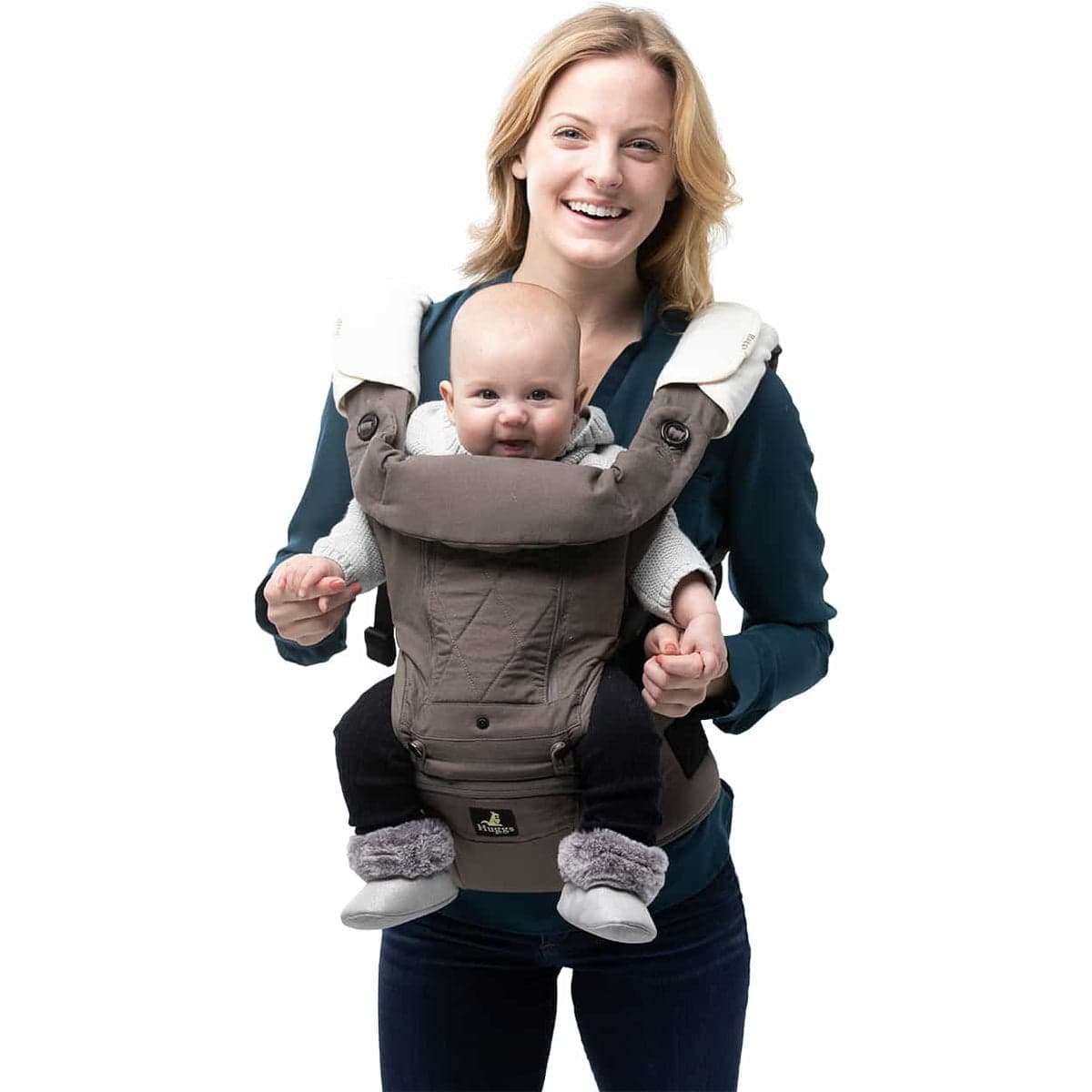
This baby hip carrier is made of a soft fabric and comes with adjustable straps. The straps are connected to a fabric pouch designed to hold a child against the wearer’s body. These straps wrap around the back, shoulders, and even hips to provide ample back support.
WHAT IS A BACK CARRIER?
A back baby carrier is more like a knapsack that features a seat for your baby to sit in. Your child will face in the direction you are when this type of carrier is worn properly.
HOW TO CARRY BABY ON BACK
It’s a bit more complicated to situate carrying a baby on your back vs. front. Follow these easy steps:
- Secure the carrier’s waist belt at your waist for a comfortable fit.
- Then, position your baby on your hip or front, centered over the carrier panel.
- Rotate your baby onto your back, keeping one hand on your baby for support. Use your other hand to slide the panel up and over your baby’s back. You might need to lean slightly forward to do this.
- Slip on the shoulder straps.
- Buckle your baby in and make sure everything’s secure. Huggs® has a magnetic chest buckle, making it easier to independently put your child in.
The Bottom Line: No matter which baby gear you choose, it should have plenty of room for your child and be comfortable.

FIND YOUR PERFECT FIT: CARRYING BABY ON BACK VS. FRONT
FRONT CARRY |
BACK CARRY |
PROS
|
PROS
|
CONS
|
CONS
|
Still a bit confused about how to carry a baby? Let’s dive deeper into the pros and cons of carrying a baby on your back vs. front.
FRONT CARRIER PROS
Front carriers are best for newborns and babies up to 6 months old. These carriers make it possible to carry a small child close to your body.
Your child will face inward toward your chest initially. Then, once they grow older and develop more strength in their neck muscles, they can face outward and take in more sights.
They also offer the benefit of being ultra-soft, washable, and easy to pack away due to their relatively small size.
You can also easily breastfeed your baby while carrying them around in the front vs. on your back. There’s even a built-in sleeping hood that provides privacy.
FRONT CARRIER CONS
This type of carrying position may not be suitable for you if you can’t master how to put your child in the carrier yourself. It might take you a few tries to get this right.
Some children may also feel overstimulated if they face forward, so have them face you. They’ll be able to bury or nuzzle their face in your chest occasionally when their surroundings become too much to take in.
Front carriers may be best for newborns, but this may change as your child grows. If your child faces outward, your child’s center of gravity is different from yours. This means your child pulls out and down on both of your shoulders, and this can be hard on the back.
In this situation, carrying your baby on your back vs. your front is best. This will let their body curve into yours and help remove pressure from your shoulders.
BACK CARRIER PROS
A back carrier is the best baby carrier for a toddler or older baby who can sit up on their own. As a matter of fact, your carrier may easily be able to accommodate your little one until they’re 3 years old or 4 years old, that is, if your back can handle baby carrying for that long.
Note that a back carrier is usually more structured than its front counterpart. In addition, it sometimes comes with a frame made of metal, and it usually features tougher fabrics.
These carriers also come with freestanding legs, so you can easily load your child into the carrier while the carrier is sitting on the floor. Then, you’ll simply hoist them up on your back and adjust the straps around your hip area to balance their weight evenly. If you have back issues, carrying your baby on the back vs. the front side will be easier on you.
BACK CARRIER CONS
A back carrier may not be right for you if you don’t feel like your child is secure or close enough when on your back.
This carrying position also might not be as convenient if you’re trying to move about in crowds easily. Still, if you master back carrying, these carriers can generally work with you in many environments, whether you’re outdoors, indoors, or on the move.
READY TO PLAY, READY TO HUGG
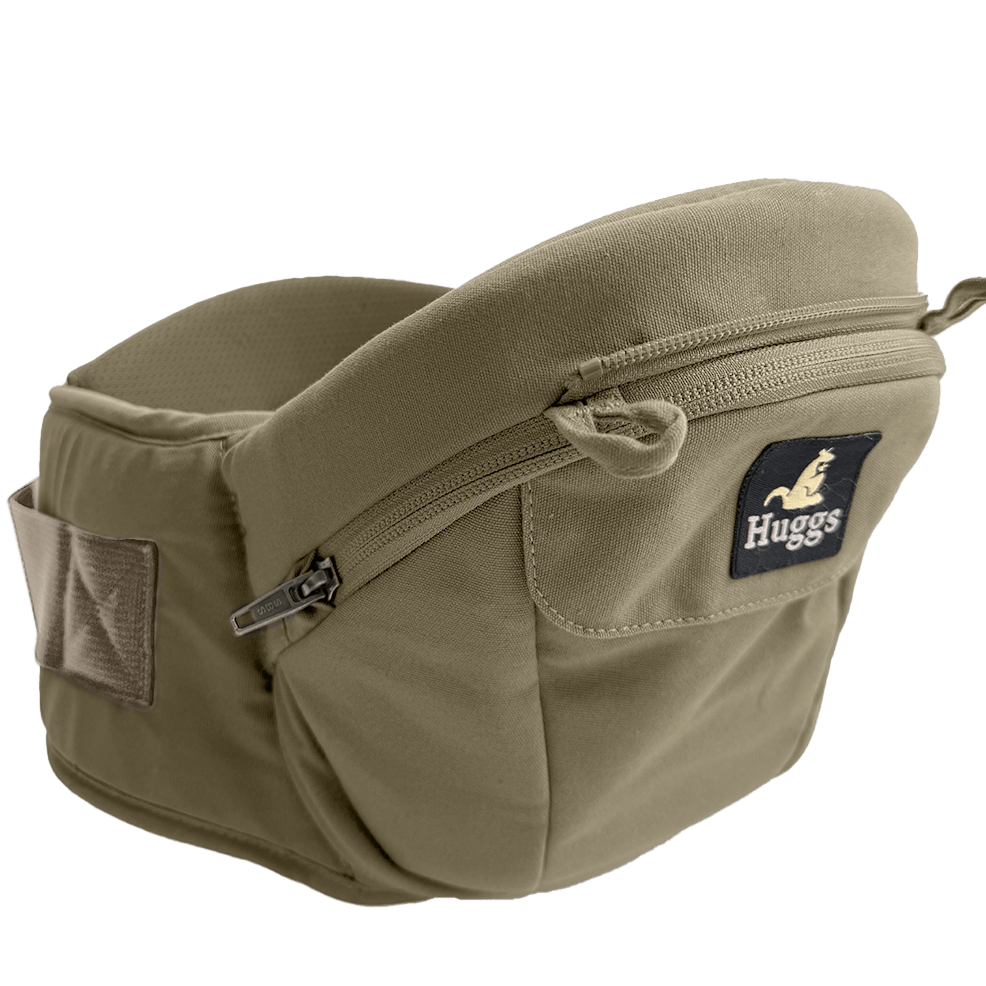
Can’t decide between carrying your baby on your back vs. the front? Get capabilities for both with your Huggs® baby hip carrier. It’s the best front and back facing infant carrier, with an ergonomic design that provides all-day comfort for your waist and back.
Order your innovative baby products today!
About The Author